Thursday, January 8, 2015

Newsletter 1/5

Mrs. Nicodemus’ Kindergarten Newsletter
January 5, 2014

Happy New Year! I hope everyone had a wonderful break and was able to relax and spend some time with friends and family. I admit that I definitely enjoyed the time at home, but I have missed the kiddos and am anxious to continue our learning! I am looking forward to picking up where we left off and cruising ahead!

Reading: Farfallina and Marcel is a fiction story about a caterpillar and gosling that become friends. They both go through life cycle changes and don’t recognize each other after they’ve changed. Eventually they find each other again and become friends again. We will discuss what happens when animals change and children will understand that some animals change as they grow and can do new things as they grow.

Target Skill: Plot
Plot refers to the events that happen at the beginning, middle, and end of a story. Identifying the plot of a story helps children comprehend and summarize the story. This week, read a story with your child and ask them questions about what happened in the beginning, middle, and end. To challenge your child, ask them to identify what things changed from the beginning to the end. We will use the language: “I cantell about the plot”.

Amazing Words: goose, caterpillar, reflection, gosling, butterfly, cocoon
This week, ask your child to come up with a sentence using one of these words. We will use the language “I canuse new vocabulary”.  

Phonemic Awareness (hearing sounds): Initial and medial /o/ – Ex: octopus, otter, rock, hot. This week, have your child try to find items around the house or outside that have the /o/ sound. You can also tell your child 2 words and ask him to identify which word has the /o/ sound. We will use the language “I canhear beginning/middle sounds”.

Phonics (matching sounds and letters): Students will learn to say the /o/ sound when they read the letter Oo and will learn to write the letter Oo when they hear that sound. This week, we will continue to practice spelling consonant, vowel, consonant (CVC) words. Students have previously learned the letters and sounds for Ff, Rr, Dd, Kk, Bb, Nn, Cc, Pp, Ss, Mm, Tt, Ii and Aa so you can continue to practice these sounds. Challenge your child to spell words using any combination of these letters. Remind them to use lower case letters unless it is a proper noun (name). We will use the language “I canspell words”.

Sight Words: they, you, of (past words: I, am, the, little, to, a, have, is, we, my, like, for, he, me, with, she, see, look)   Please practice these words at home! Students can write, search for, or use flash cards to read the words. We will use the language “I canread sight words”.  

Math: Before the break, we finished the chapter on addition. We will continue to review these concepts and students are expected to be able to add fluently to 5, so I encourage you to continue practicing at home. This week we will be starting the chapter on subtraction, and students will be introduced to the terms “take away” and “minus”. Throughout the chapter, we will not only try to solve problems where we find how many are left after taking some away (5-2= ?), but also problems where we have to find how many were taken away (5-?=3) or how many we started with (?-2=3) Students will be using the language “I can subtract by taking away”.

Feel free to contact me with any questions @ 943-6924 ornicodemus_a@westcler.org.

Monday, December 1, 2014

Newsletter 12/1


Mrs. Nicodemus’ Kindergarten Newsletter 
December 1, 2014
Reading: Little Quack is a fiction story about Mama Duck and her ducklings. Mama Duck asks her babies to jump into the pond and paddle with her, but the ducklings are scared. One by one, they face their fear and jump into the water. Children will understand the nervousness they feel when they are not sure if they are ready for something yet and the excitement they feel when they are big enough to try something new. Thinking about these things will help them answer the question “What new things can you do as you get older?”

Target Comprehension Skill: Plot – the events and actions in a story. Answering questions about plot helps children comprehend and summarize the text. We will use the language: “I cantell about events in a story”. This week, read a story with your child and have them act out an event from the story. To challenge your child, ask them to act out an event from the beginning, the middle, and the end of the story.

Amazing Words: duckling, paddle, proud, pond, plunged, brave
This week, ask your child to come up with a sentence using one of these words. We will use the language “I canuse new vocabulary”.  

Phonemic Awareness (hearing sounds): Initial /r/ – Ex: rug, rabbit, rock. This week, have your child try to find items around the house or outside that have the /r/ sound. You can also tell your child 2 words and ask him to identify which word has the /r/ sound. Students should be able to identify if /r/ is in the beginning or end of the word. We will use the language “I canhear beginning sounds”.

Phonics (matching sounds and letters): Students will learn to say the /r/ sound when they read the letter Rr and will learn to write the letter Rr when they hear that sound. This week, we will also continue spelling consonant, vowel, consonant (CVC) words. Students have previously learned the letters and sounds for Bb, Nn, Cc, Pp, Ss, Mm, Tt, Ii and Aa so you can challenge your child to spell words using any combination of these letters. Remind them to use lower case letters unless it is a proper noun (name). We will use the language “I canspell words”.

Sight Words: me, with, she (past words: I, am, the, little, to, a, have, is, we, my, like, for, he)
Please practice these words at home! Students can write, search for, or use flash cards to read the words. We will use the language “I canread sight words”.  

DIBELS Practice: Please continue to practice the skills that will be on the DIBELS test next week. This includes letter naming, phoneme segmentation, and nonsense word reading. Students will have one minute for each section.

Math: We have begun Ch. 5 and have learned that adding means to combine things together. This week, we will solve addition word problems, complete addition sentences, and write addition number sentences for sums up to five. We will use pictures and cube train models to help us. Students will be using the language “I can add numbers”. This week, write an addition sentence and leave one of the addend spots blank. Ask your child to draw a picture to help them solve the problem. If he is able to solve it without drawing a picture, challenge your child by saying a number and asking him, “How many more are needed to make ____?”  

Thank You! - Thank you to all of the families that volunteered or sent food in for our feast last week. The students had a great time and there was plenty of new food for them to try and share with their friends. I hope everyone was able to enjoy the few extra days off for Thanksgiving and spend some time with friends and family.

Winter Clothing - As the weather turns colder, many students are wearing hats, gloves, scarves, etc. Many times students forget these items at school or they fall out of the cubbies and are never claimed. Please be sure to label any items you send with your child. Even initials can help me narrow down who they may belong to.

Feel free to contact me with any questions @ 943-6924 ornicodemus_a@westcler.org.

Thanksgiving Feast!

Thank you to all of the parents that volunteered and to those that sent food in for our students. Check out some of our fun in the pictures below!


Tuesday, November 25, 2014

Feast preparation!

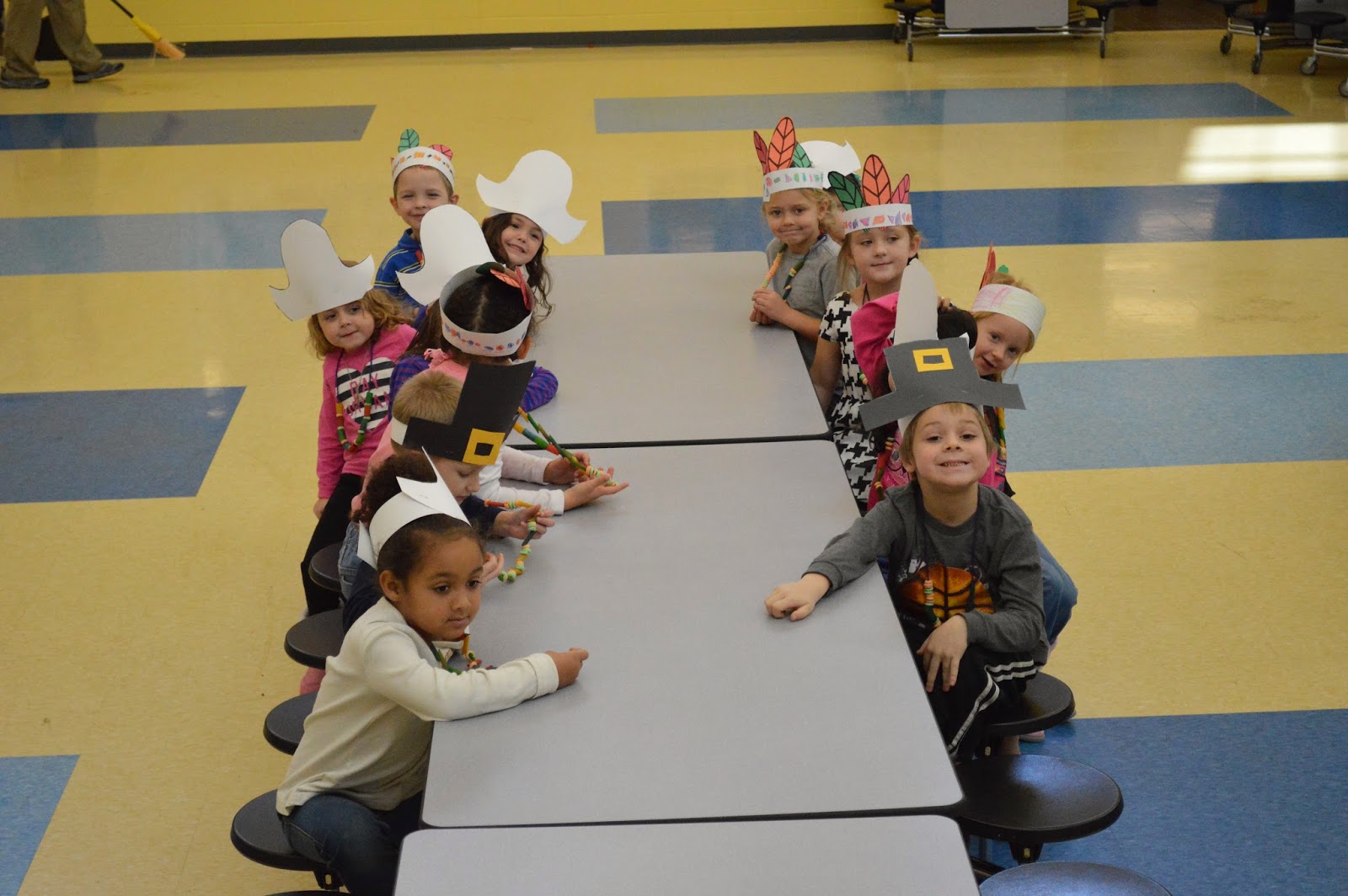
Our Pilgrim and Native American hats and macaroni necklaces. Will we have more Pilgrims or Native Americans at our Feast today?? Stay tuned to find out! 

Wednesday, November 19, 2014

October learning!


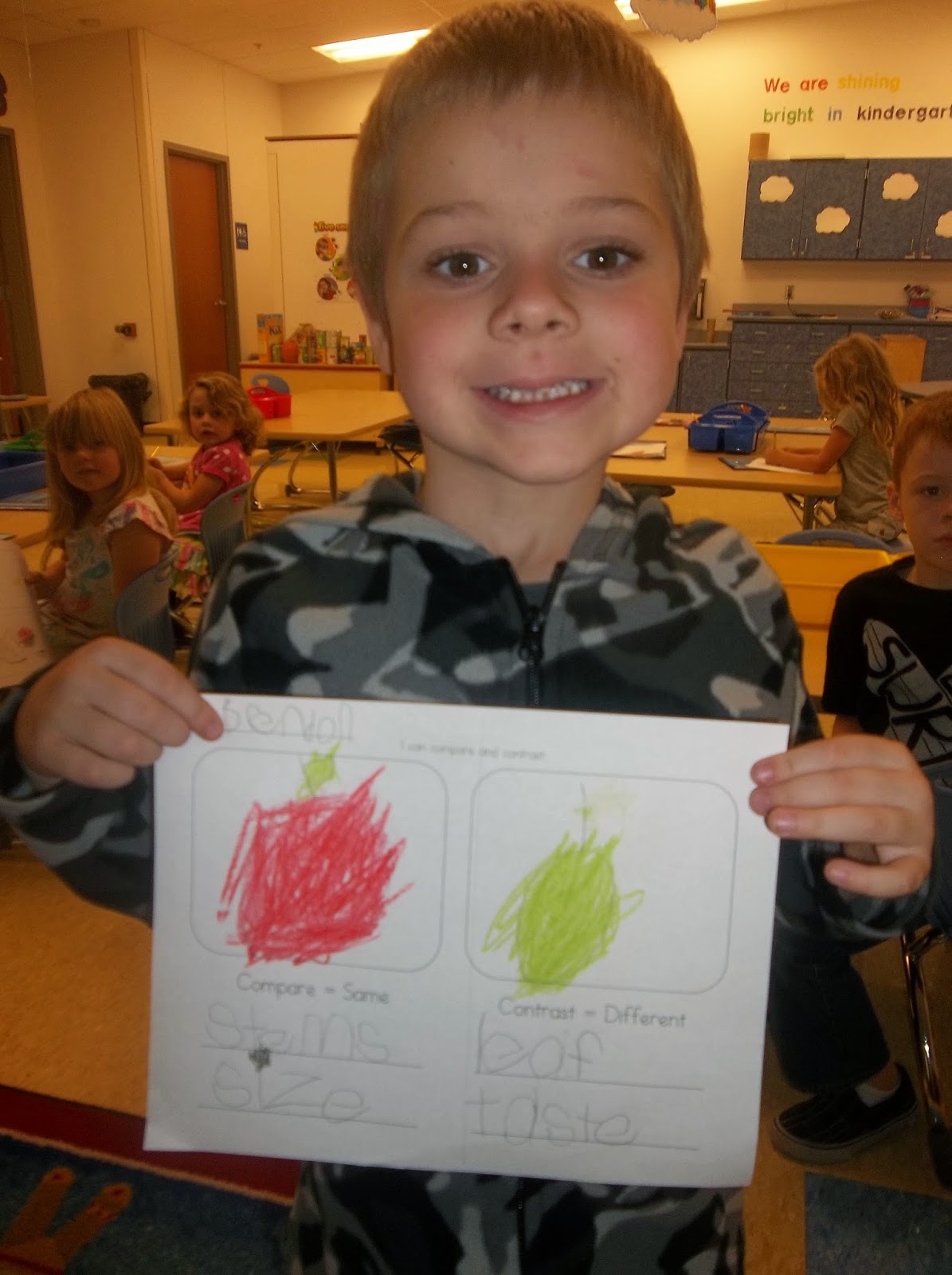
This week we are practicing the skill 'Compare and Contrast'. We have learned that 'Compare' means to think about what is the same and 'Contrast' means to think about what is different. Here are some pictures from when we compared and contrasted two different apples.  


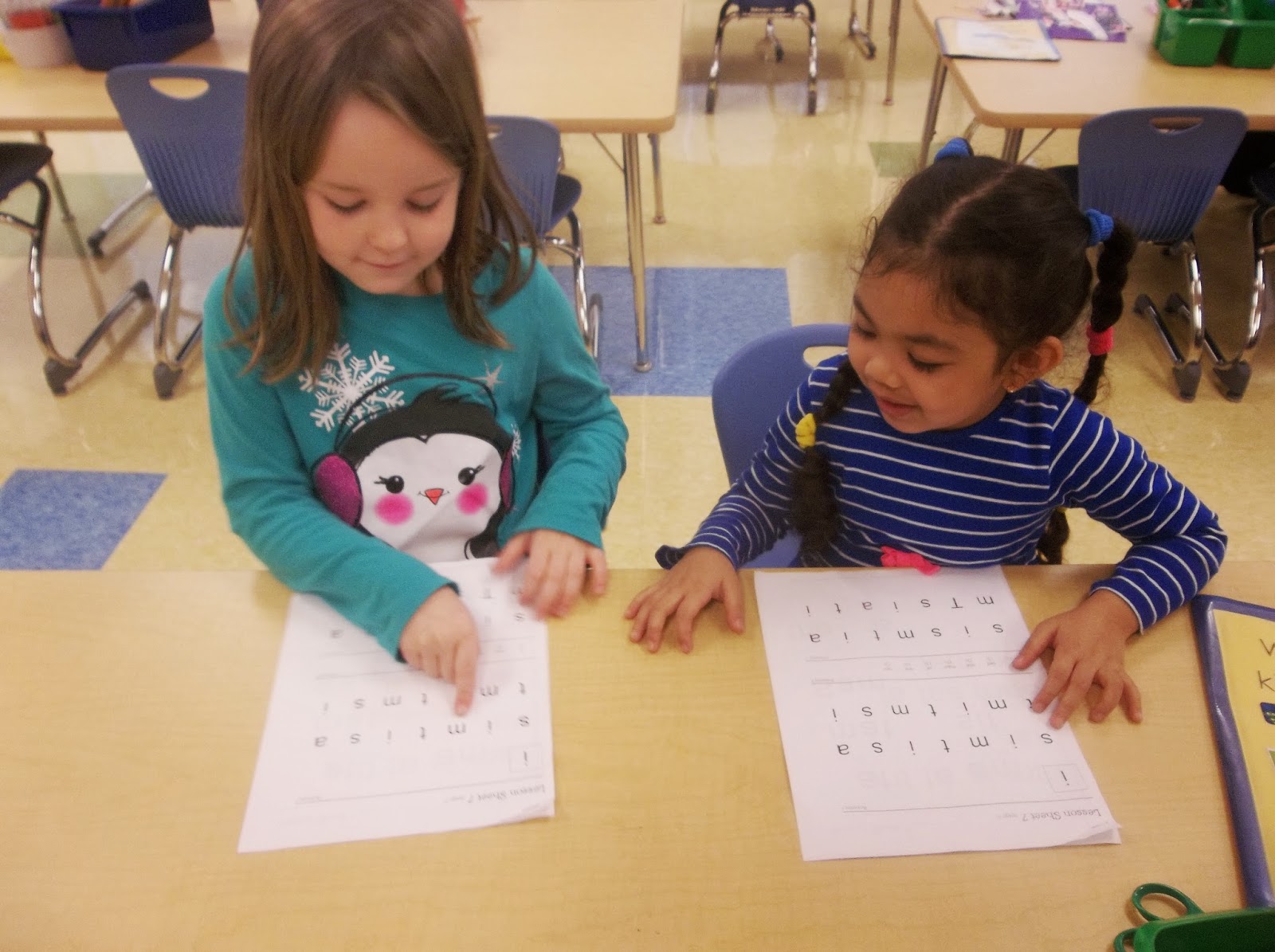
Every two weeks we get a new set of sight words to learn. These are 'tricky' words because they do not always make the letter sounds with which we are familiar. We practice reading and spelling these words because they are common words that we come across often. In the pictures below, we are playing a game where each student has a different letter and must find the other letters needed to build a word. The students loved this game and did very well!


 Skills Group: We practice letter sounds, bumpy and smooth blending, and reading sentences. When we bumpy blend, we make each sound individually. When we smooth blend, we slowly make the sounds but we do not stop in between each sound. When we read, we try to make it sound fluent; just like we are talking. 


We have learned about the American flag and the Pledge of Allegiance several times this year. We read the story We Are So Proud, we celebrated Constitution Day, and we celebrated Veteran's Day. We are thankful for our country! 


We read a story about different animals and what their babies are called. Students chose an animal and it's baby to draw and write about. 

Meerkat and Pup; Lion and Cub
Zebra and Foal; Lion and Cub

Giraffe and Calf; Zebra and Foal

Students love working in the math and literacy centers! They cooperate to put an ABC puzzle together, they work on different ways to make a number, and they match uppercase letters and lowercase letters.


Addition Math Strategies

Last week, we started learning about addition in math class. We have learned that addition means "putting things together". We now know that the symbol '+' means 'plus' and tells us to add, and that the symbol '=' means "is equal to' and tells us that what is on one side is the same as what is on the other side. We also learned some different strategies to help us solve addition problems. Some of these are below!

We can use objects to help us solve math problems...
We can 'act it out' to solve math problems...
and we can use drawings to help us solve math problems!


Mrs. Nicodemus Kindergarten Newsletter 
November 17, 2014

Reading: Little Panda is a nonfiction story about a panda that was born at the San Diego Zoo in 1999. Children will see how the panda grows and that will help them answer the question “How does a panda change in its first year of life?” They will understand that as a panda gets older it changes in size, can do new things, and has new experiences.

Target Comprehension Skill: Compare and Contrast – When we compare, we think about the ways things are alike. When we contrast, we think about the way things are different. Answering compare and contrast questions helps children comprehend and make logical inferences about the text. We will use the language: “I cancompare and contrast”.

Amazing Words: measure, weigh, healthy, bamboo, curious, explore
This week, ask your child to come up with a sentence using one of these words. We will use the language “I canuse new vocabulary”.  

Phonemic Awareness (hearing sounds): Initial and final /n/ and /b/ – Ex: nap, fin, bat, cab. This week, have your child try to find items around the house or outside that have the /n/ or /b/ sound. You can also tell your child 2 words and ask him to identify which word has the /n/ or /b/ sound. Students should also be able to identify if /n/ or /b/ is in the beginning or end of the word. We will use the language “I canhear beginning/ending sounds”.

Phonics (matching sounds and letters): Students will learn to say the /n/ and /b/ sounds when they read the letters Nn, and Bb and will learn to write the letters Nn and Bb when they hear those sounds. This week, we will also begin to practice spelling consonant, vowel, consonant (CVC) words. Students have previously learned the letters and sounds for Cc, Pp, Ss, Mm, Tt, Ii and Aa so you can challenge your child to spell words using any combination of these letters. Remind them to use lower case letters unless it is a proper noun (name). We will use the language “I canspell words”.

Sight Words: me, with, she (past words: I, am, the, little, to, a, have, is, we, my, like, for, he)       
Please practice these words at home! Students can write, search for, or use flash cards to read the words. We will use the language “I canread words”.  

Math: Last week, we began Ch. 5 and learned that adding means to combine things together. Students will be using the language “I can add numbers”.

Thanksgiving Feast – Our Thanksgiving Feast will be Tuesday, November 25th. The morning feast will be at 9:30 and the afternoon feast will be at 1:15. Please let me know if you are interested in helping out.


Feel free to contact me with any questions @ 943-6924 ornicodemus_a@westcler.org.